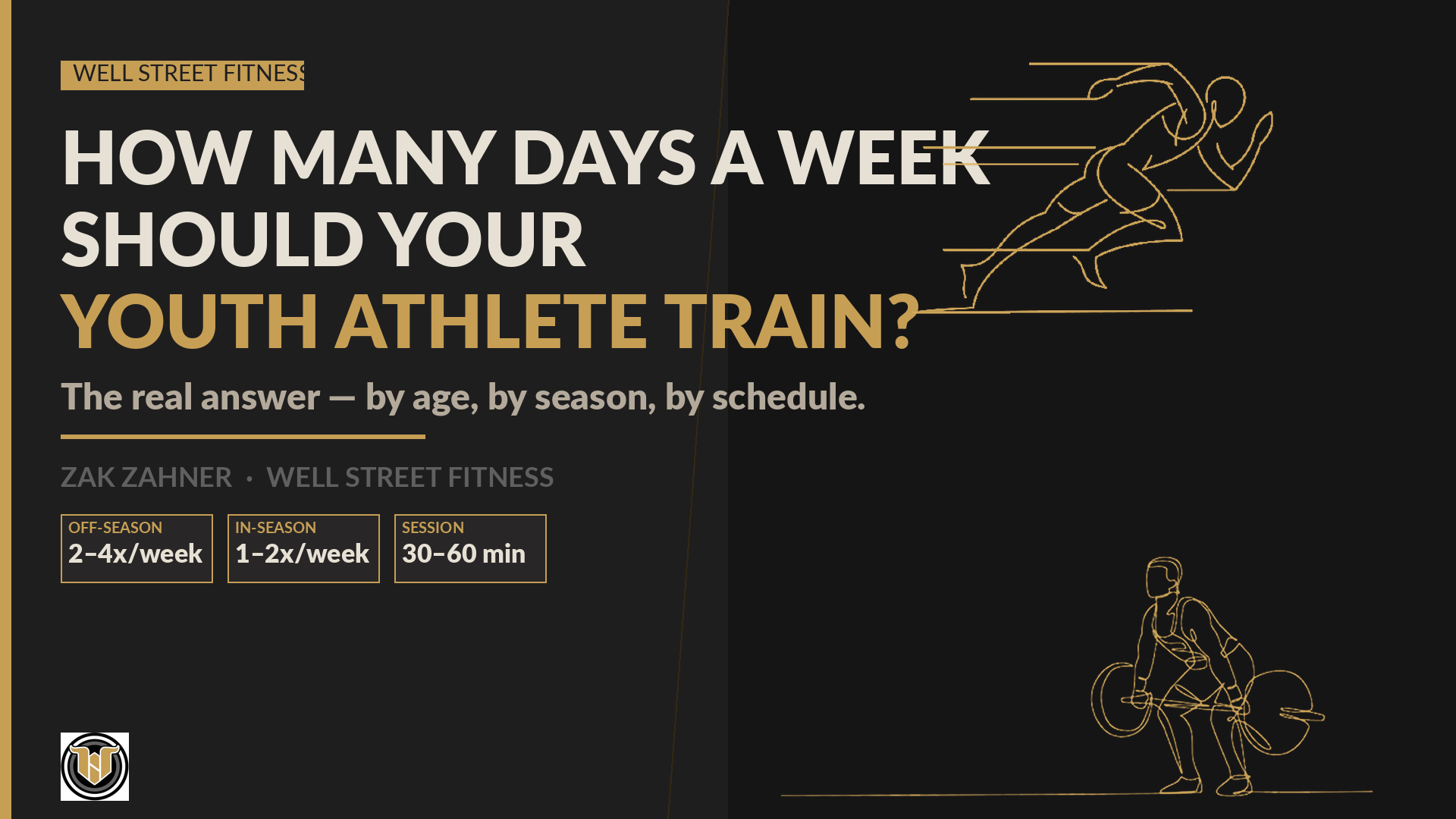

Listen To this Podcast of Me talking about How Many Days a Week Should Your Youth Athlete Train
Parents ask me this all the time.
How many days a week should my kid be in the gym?
How long should the sessions be?
It's a fair question.
And the honest answer is: it depends on your athlete.
But here's a real rule of thumb you can use right now.
Off-Season vs. In-Season
Off-season, I tell parents: train as much as your schedule honestly allows.
Two to four sessions per week is the sweet spot.
More than four and you risk burning out the nervous system.
You also risk burning out the love for the sport.
Both matter.
In-season is where most families make a big mistake.
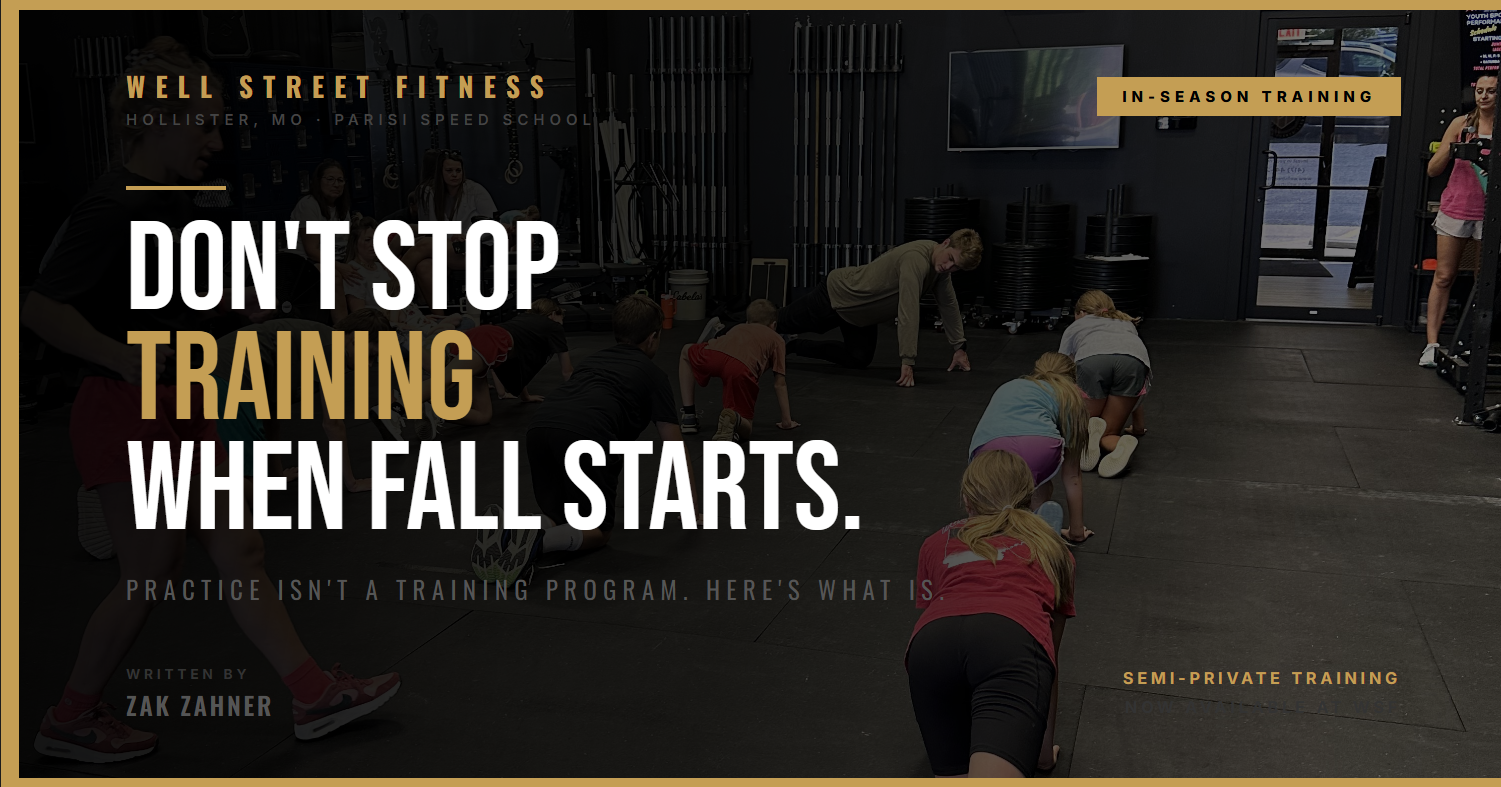
When the season starts, kids stop training altogether.
I understand why.
Practice is happening. Games are happening. Life is full.
But here's what you need to know.
Practice develops sports-specific skills.
Your kid gets better at the game.
But practice is not the same as intentional athletic development.
You're focused on winning, not on getting faster.
And when athletes stop all training during the season, they start losing their strength and power gains within three to four weeks.
The work you put in during the off-season quietly disappears.
My recommendation for in-season: one to two sessions per week.
Even 30 minutes.
Enough to maintain what they built.
Enough to keep the edge.
Training Frequency by Age
Not every athlete is the same.
Here's how I break it down.
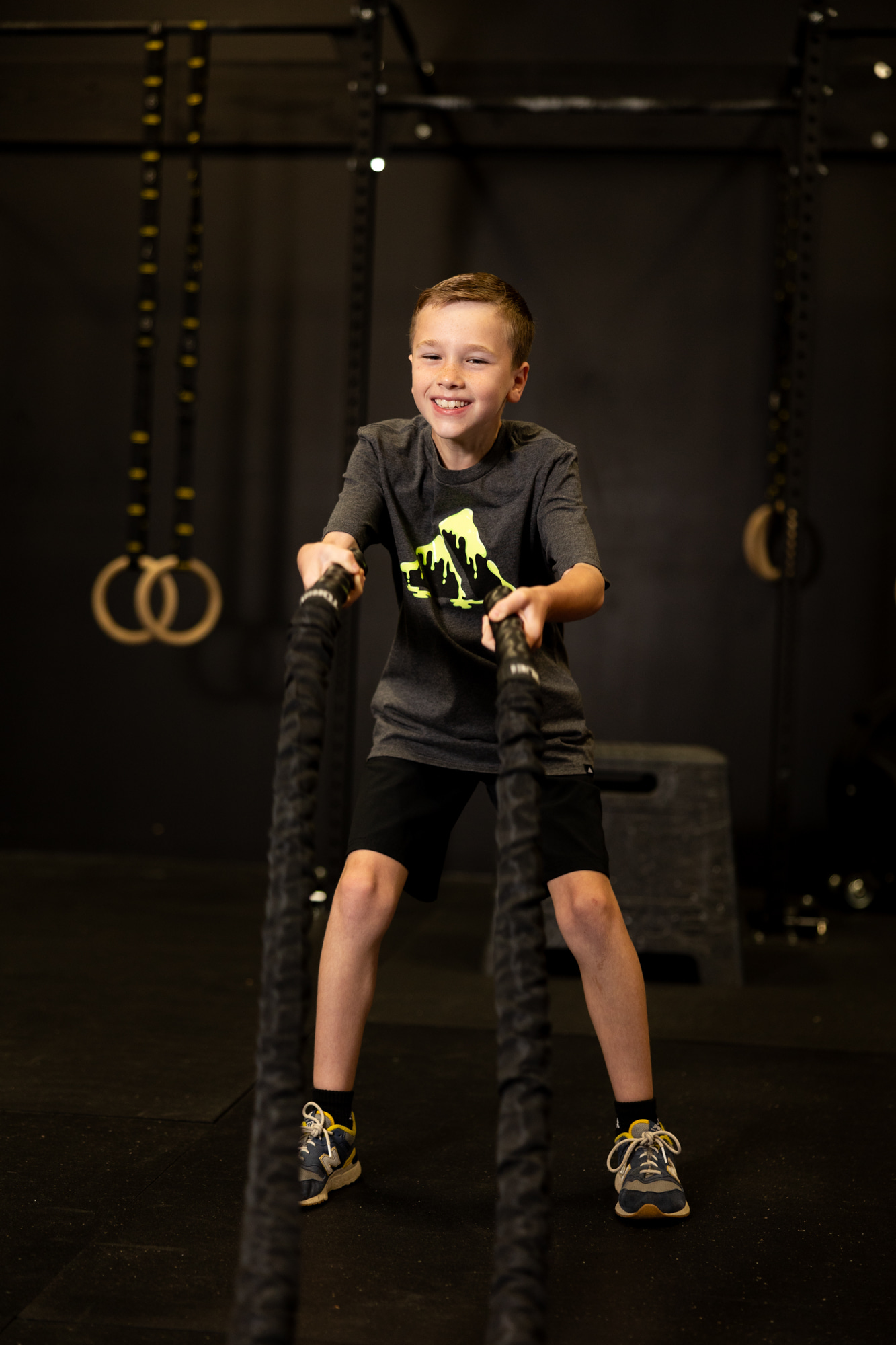
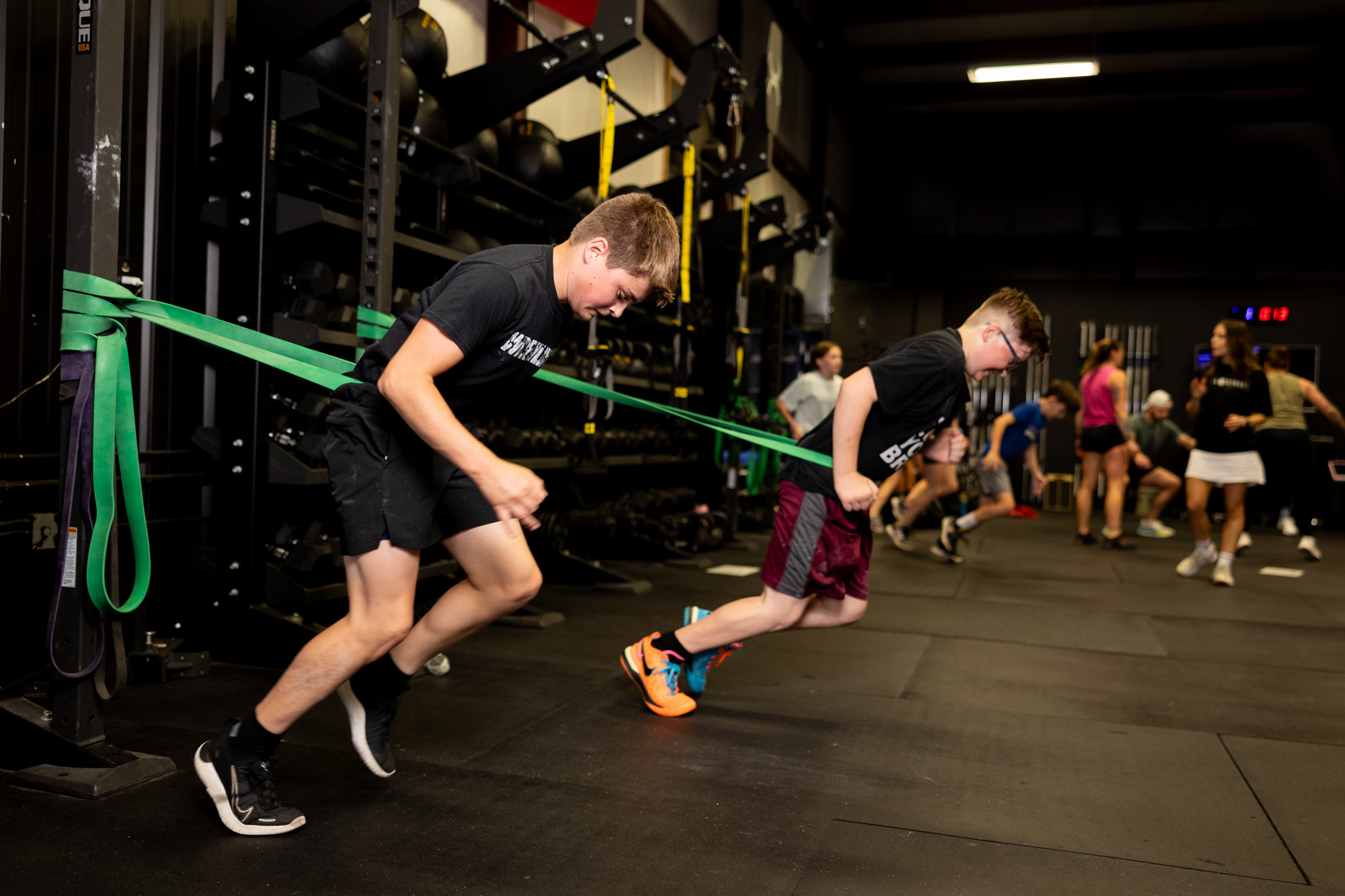
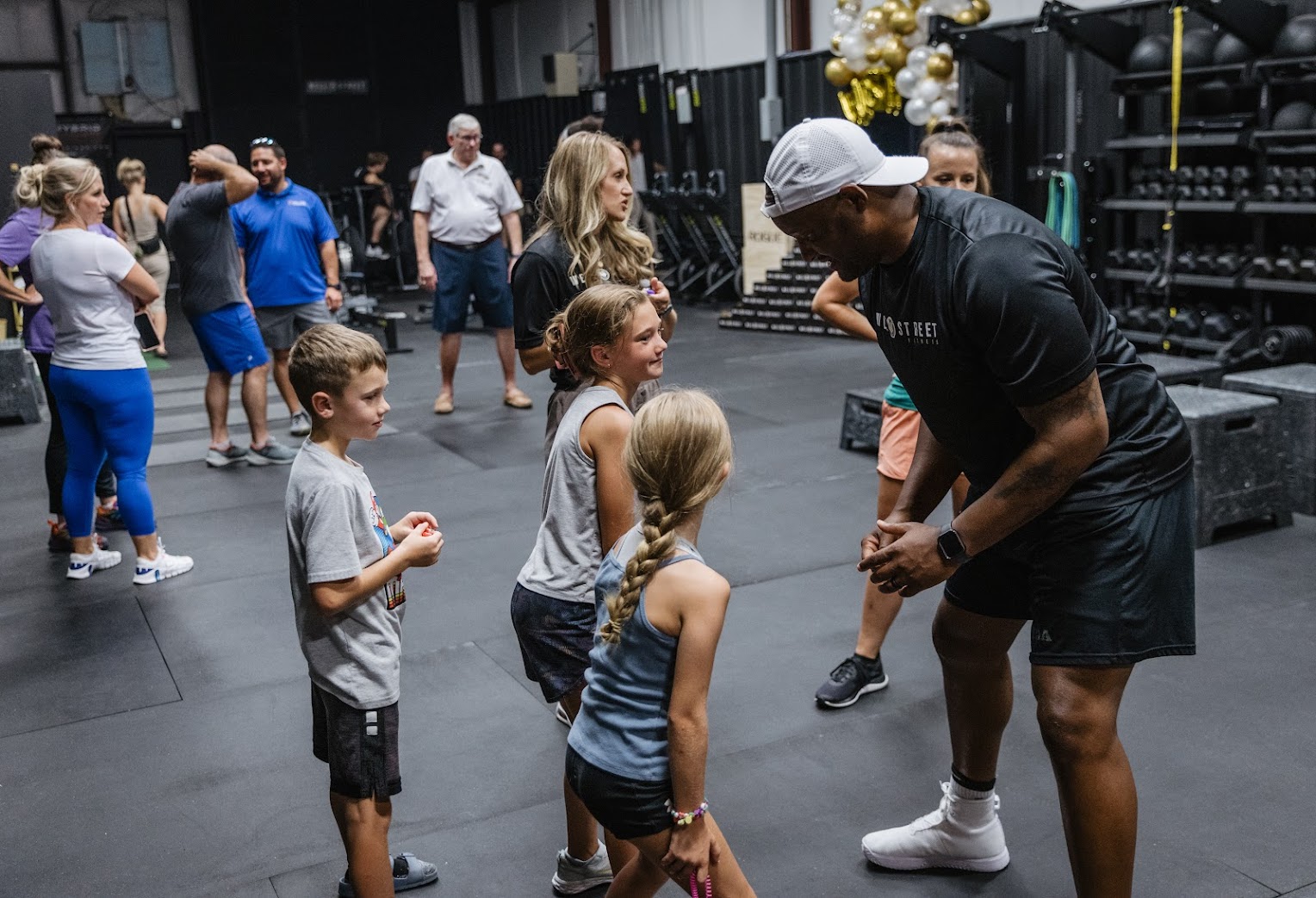
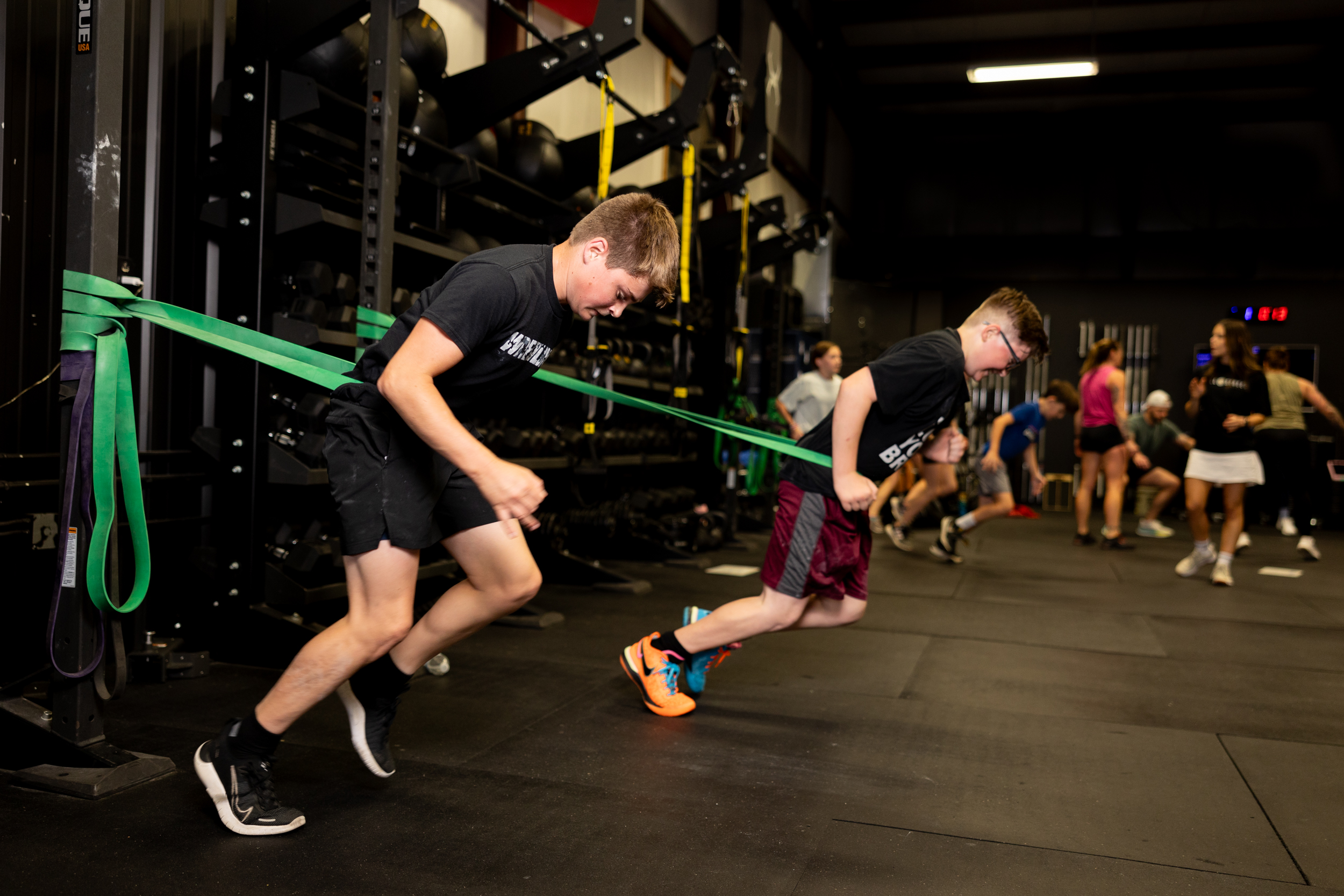
Ages 7 to 12: 2 to 3 sessions per week, 30 minutes each.
At this age, we are building the foundation.
Movement patterns, body awareness, basic strength.
Thirty minutes is the right length. Young athletes have shorter attention spans, and we can get everything they need done in that window.
The goal here is to keep it effective and keep it fun.
Ages 12 to 15: 3 sessions per week, 30 to 60 minutes.
The foundation is there. Now we build on it.
These athletes are more focused, more driven, and more serious about their sport.
We can start pushing for real strength, speed, and power gains.
Ages 16 to 18: 3 to 4 sessions per week, 60 minutes.
Older athletes can handle higher intensity.
Their bodies are more developed.
Their training age is older.
We push harder here, and we produce bigger results.
The Most Effective Off-Season Schedule
For athletes 13 and older, here's what I recommend if you want to maximize development.
Option one: Four 30-minute sessions per week.
Option two: Three 60-minute sessions per week.
Both give you roughly two to three hours of total training.
Both work.
The difference is in the structure.
Four shorter sessions spread the work through the week and allow for more frequent movement practice.
Three longer sessions mean fewer trips to the gym but more time for teaching, more reps, and more detailed coaching.
The best schedule is the one your athlete actually shows up to.
Work with your trainer to find what fits.
Real Results on the Minimum Schedule
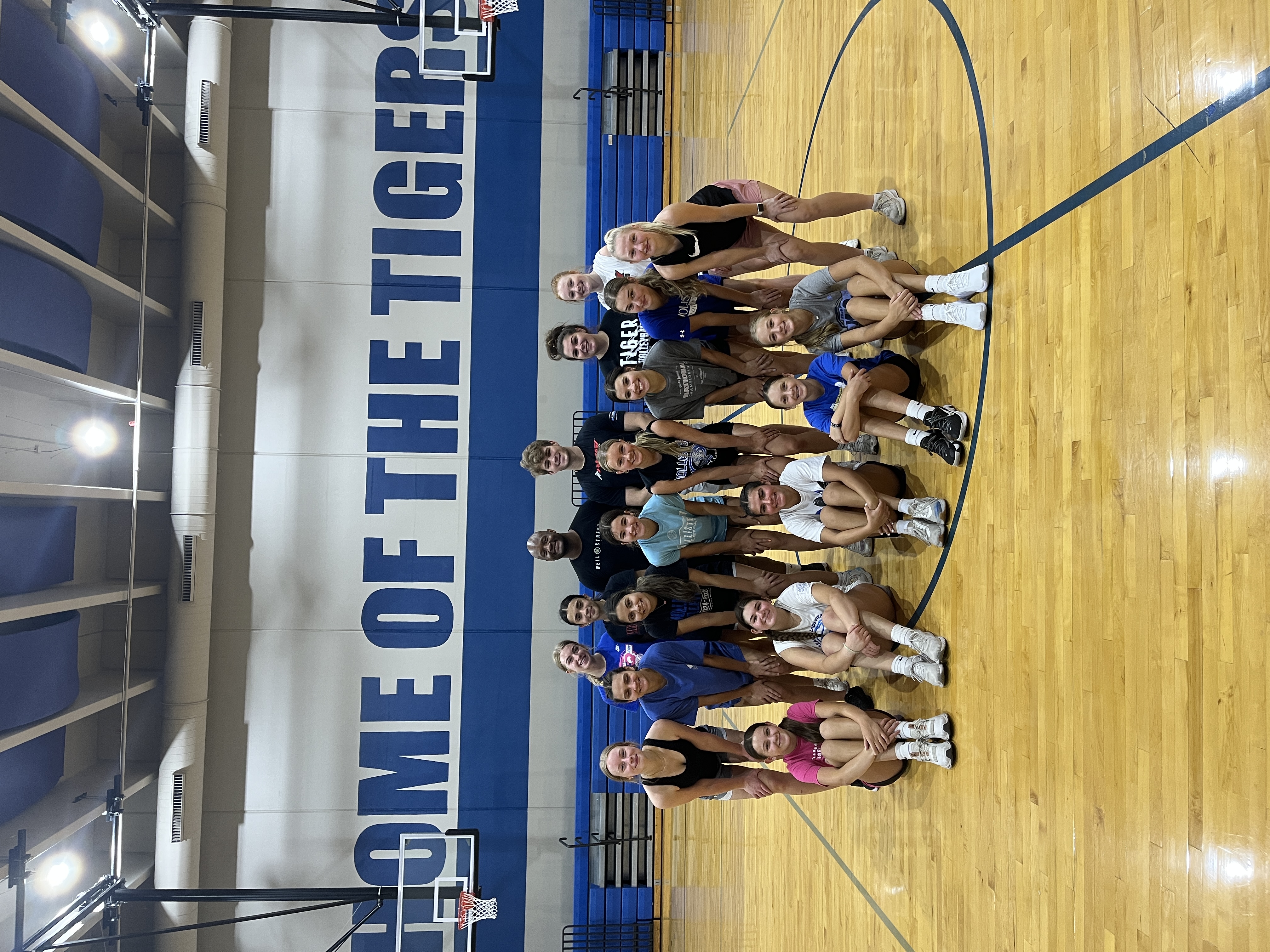
Lily is 14 years old. She plays volleyball.
She came in with a best vertical jump of 16 inches.
We built her a custom training plan: two sessions per week, 30 minutes each.
Four weeks later, her vertical is a consistent 16.9 inches.
Her reactiveness, power output, strength, overhead strength, and injury resilience all improved.
On two days a week.
Thirty minutes a session.
That's the lower end of what we recommend.
Imagine what three sessions a week looks like.
Or four.
The gains compound when the program is built right.
What Most Coaches Don't Talk About
Here's something I believe that not every trainer focuses on.
Athletic development is not just physical. It's mental.
When I work with a young athlete, I'm not just building speed and strength.
I'm teaching them why each movement matters.
What this drill is doing for their body.
How to push themselves when no one is watching.
Coach John Perry at Nixa High School has built one of the most respected programs around on this exact idea.
Mental performance is trainable.
And it's our job as coaches to train it alongside the physical.
When an athlete understands the why, they show up differently.
They buy in.
They push instead of waiting to be pushed.
That's what we build at Well Street Fitness.
The Bottom Line
Your kid does not need to train every day to see real results.
But they do need the right program.
Practice alone is not enough.
Every season they stop training intentionally, they lose ground they have to rebuild.
And a 30-minute session with a coach who built the plan for your specific athlete does more than two hours of random gym time.
If you want a custom training plan built for your kid's age, sport, and schedule, reach out to Well Street Fitness.
We'll handle the rest.
.jpg)
















.jpg)
.jpg)



.jpg)
.jpg)





.png)



.png)









.png)


.png)

.png)


